
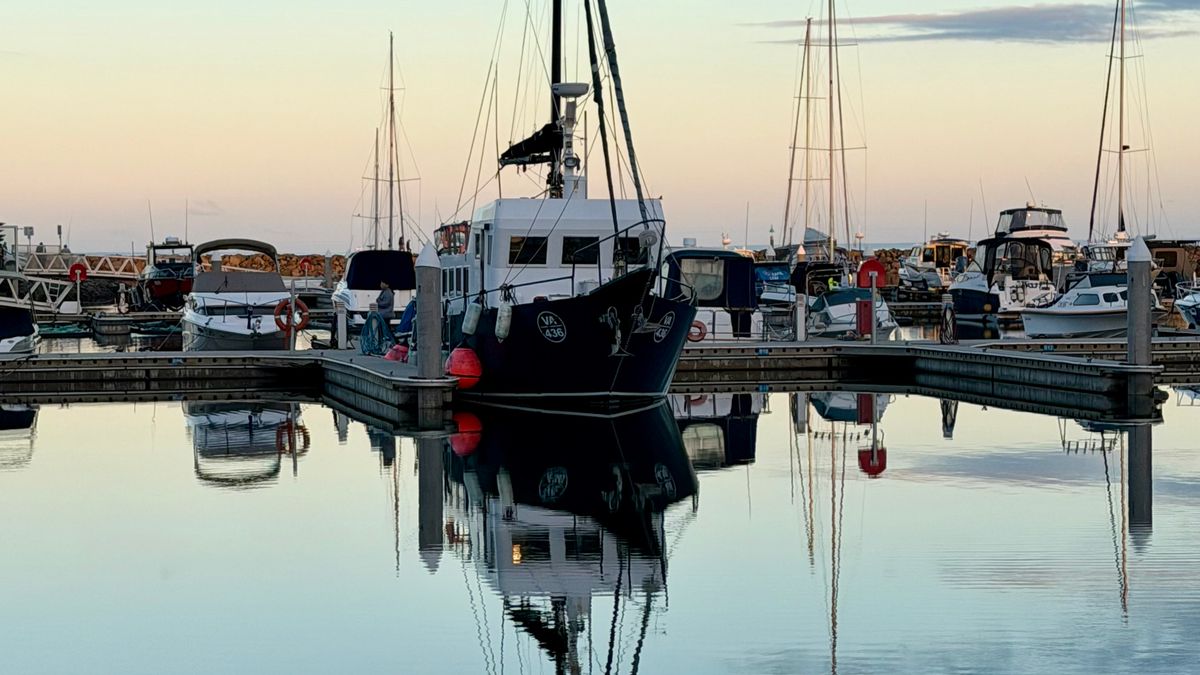
Arrive in a British harbour town at the wrong hour and you may find the picture postcard has vanished. Boats sit slumped on mud, the slipway ends in a wall of ooze, and the ferry you planned to catch is either long gone or waiting patiently for water that will not return for six hours. Come back at the right hour and the same place is transformed: masts reflected in deep blue water, families launching dinghies, and a clear path along the sands to a headland you could not reach earlier.
British tides are unusually dramatic. Our islands sit in a funnel of ocean between the Atlantic and the shallow North Sea, and the tidal range reflects it. In parts of the Bristol Channel and the Solway Firth, the difference between high and low water can exceed twelve metres. Even along gentler stretches of the south and east coasts, three or four metres is common. That is the height of a bungalow, moving in and out twice a day.
None of this needs to be daunting. A little knowledge of how tides work, and where to find the right local information, turns an unpredictable day into a well-planned one.
Most British coastlines experience two high waters and two low waters roughly every 24 hours and 50 minutes, which is why tide times drift about an hour later each day. If high water is at 9am today, expect it around 10am tomorrow.
The size of the tide also changes through the month. Around the full moon and the new moon, the sun and moon pull together and you get spring tides — nothing to do with the season, and the largest ranges of the month. When the moon is at half phase, the pulls partly cancel and you get neap tides, with a much smaller range and weaker currents.
Published tide tables are predictions, not promises. Treat them as a reliable starting point and expect a margin either side.
In harbour towns, the tide is not a background detail — it is the timetable. Many small ferries, especially those crossing estuaries or running to islands, can only operate near high water because the channel dries out at other states. Services may run "two hours either side of high tide", or shift by an hour or more from day to day. You will often see adjustments noted for the week ahead rather than fixed departure times printed for the whole season.
Slipways are just as tide-dependent. A public slipway that looks generous at high water may end thirty metres short of the sea at low tide, with a stretch of soft mud in between. Some harbours have a "half-tide" slipway that only becomes usable once the water reaches a certain level. Local sailing clubs and harbourmasters usually publish a simple statement of this — something like "slipway usable from two hours before to two hours after high water, neaps excepted".
This is why the harbour notice board, the harbourmaster's office and the local notice to mariners still matter in a digital age. They carry the specifics no generic app can know: dredging works, a closed pontoon, a changed ferry landing, a temporary exclusion zone for a regatta. Before you plan a day on or beside the water, spend five minutes reading them.
Some of the finest coastal walks in Britain come with a tidal condition attached. Causeways to tidal islands, beach routes around headlands, and paths across estuary sands are only passable at low water — and the window can be surprisingly short.
A few practical habits make all the difference:
Local walking guides and national park or council information boards usually state the safe window clearly. If a sign says the crossing is passable for a certain number of hours around low water, believe it.
Once you start paying attention, the tide becomes a companion rather than an obstacle. You notice the strandline of seaweed and shells marking the last high water, the ring of damp sand around a harbour wall, the direction boats are swinging on their moorings. You learn that the best time to watch working boats unload is the couple of hours around high water, and that the rockpools appear a few hours after.
Plan around the tide and a harbour town gives you far more than a quick stroll and a bag of chips. It gives you the mudflats at dawn, the beach that only exists twice a day, and the quiet hour when the water finally returns to fill the harbour again.

Hi, my name is Anthony kuber. I am artist and fashion designer.
I love to travel and writing blogging.
Your email address will not be published. Required fields are marked *
Software Developer & Writer
Hey, I'm Diva, a developer and writer blending code and creativity. I'm driven by a deep curiosity and a relentless pursuit of excellence. Join me as I craft digital solutions and captivating stories.


